
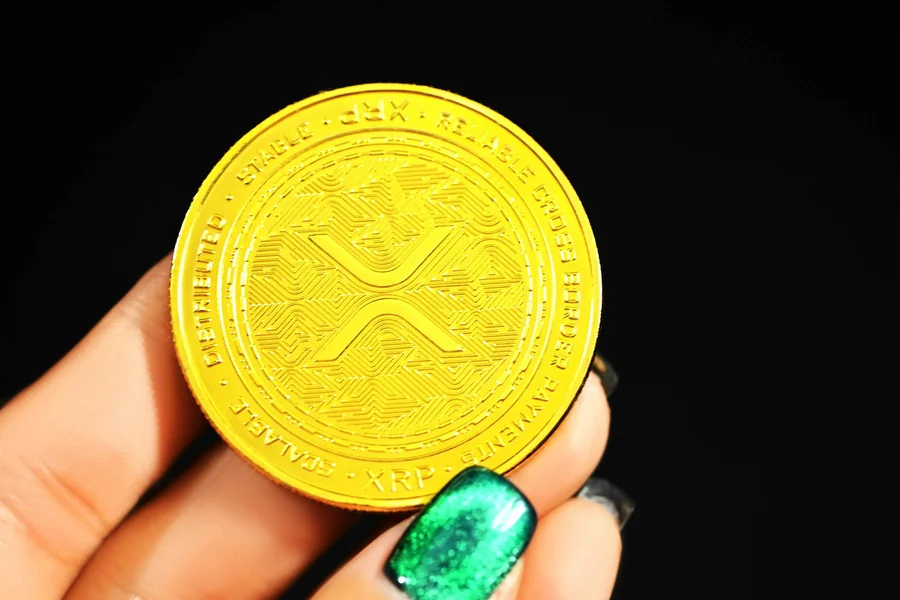
Bitcoin and XRP are among the most recognizable cryptocurrencies in the world, but their similarities are often overstated.
While both use distributed ledger technology and allow users to transfer digital value, they were created with different objectives, operate through different mechanisms, and address different financial challenges. Understanding why XRP is different from Bitcoin can help investors, businesses, and cryptocurrency enthusiasts better appreciate their respective roles in the digital economy.
Different Origins and Purposes
Bitcoin was introduced in 2009 by an anonymous individual or group known as Satoshi Nakamoto. Its primary objective was to create a decentralized peer-to-peer electronic cash system that could operate without banks, governments, or other financial intermediaries.
Over time, Bitcoin has also become widely recognized as a potential store of value. Its limited supply and decentralized nature have contributed to its reputation as digital gold.
XRP, on the other hand, was launched in 2012 alongside the XRP Ledger (XRPL). It was designed to facilitate fast, efficient transfers of value, including international payments and currency exchanges.
Rather than focusing primarily on replacing traditional money, XRP can serve as a bridge asset between different currencies and financial systems. Its design addresses some of the inefficiencies associated with moving money across borders.
Transaction Speed and Network Efficiency
One of the most significant differences between XRP and Bitcoin is how quickly transactions are processed.
Bitcoin produces a new block approximately every ten minutes. Depending on network conditions and the number of confirmations required, completing a transaction can take considerably longer.
XRP transactions typically settle within three to five seconds. The XRP Ledger is designed to process transactions quickly without relying on traditional cryptocurrency mining.
This difference makes XRP particularly interesting for payment applications where speed is essential. Businesses transferring funds internationally may benefit from shorter settlement times, especially when compared with traditional payment processes that involve multiple intermediaries.
Bitcoin can also support faster payments through additional technologies such as the Lightning Network. However, its underlying blockchain operates differently from the XRP Ledger.
Proof of Work vs. Consensus
Bitcoin relies on a consensus mechanism known as Proof of Work (PoW). Miners use computing power to solve cryptographic challenges, validate transactions, and add new blocks to the blockchain. In return, they receive newly issued Bitcoin and transaction fees.
This mechanism plays a central role in Bitcoin’s security and decentralized monetary system. However, it also requires substantial computational resources and electricity.
XRP uses a different approach. The XRP Ledger relies on a consensus protocol in which independent validators agree on the validity and ordering of transactions.
Because XRP does not require mining, its transaction validation process consumes considerably less energy than Bitcoin’s Proof of Work mechanism.
The two networks therefore represent different approaches to distributed ledger security, transaction verification, and resource efficiency.
XRP and Bitcoin Have Different Supply Models
Bitcoin has a maximum supply of 21 million coins. New BTC enters circulation through mining, with the issuance rate decreasing approximately every four years through an event known as the Bitcoin halving.
This predictable supply schedule is an important part of Bitcoin’s economic model and its appeal to investors who value scarcity.
XRP has a maximum original supply of 100 billion tokens, all of which were created when the XRP Ledger was launched. Unlike Bitcoin, XRP does not introduce new tokens through mining.
A portion of the XRP supply is held by Ripple, including tokens managed through escrow arrangements. This distribution model has generated ongoing discussions about ownership concentration and the potential influence of large token holders.
Additionally, XRP transaction fees are destroyed rather than distributed to validators. This gradually reduces the total supply, although the amount removed through ordinary transactions is relatively small.
Transaction Fees and Payment Applications
Transaction costs are another important consideration when comparing XRP vs. Bitcoin.
Bitcoin transaction fees fluctuate depending on network demand and the amount of available block space. During periods of high activity, users may need to pay higher fees to achieve faster confirmation.
XRP transactions generally involve very small network fees. Combined with rapid settlement, this makes the XRP Ledger suitable for applications involving frequent transfers of digital assets.
However, users should distinguish between network transaction fees and the total cost of using a payment service. Cryptocurrency exchanges, liquidity providers, and payment companies may charge additional fees regardless of which digital asset is involved.
Is XRP More Centralized Than Bitcoin?
Decentralization is one of the most debated topics in the XRP vs. Bitcoin comparison.
Bitcoin operates through a global network of miners and independent nodes. Its architecture is designed to allow participants to verify transactions and enforce network rules without depending on a central authority.
The XRP Ledger also operates as a distributed network with independent validators. However, its consensus model relies on participants selecting trusted validators, which differs from Bitcoin’s Proof of Work approach.
Critics of XRP frequently point to Ripple’s substantial token holdings and its historical involvement in the ecosystem. Supporters argue that Ripple does not own or directly control the XRP Ledger and that independent participants contribute to its operation.
It is also important to distinguish between Ripple and XRP. Ripple is a financial technology company, XRP is a digital asset, and the XRP Ledger is an open-source distributed ledger. Although closely associated, they are not the same thing.
Different Use Cases Beyond Payments
Bitcoin’s primary strengths include digital asset ownership, decentralized value transfer, and its potential role as a long-term store of value.
XRP’s strengths are more closely connected to payment efficiency, liquidity, and financial infrastructure. The XRP Ledger also supports additional functionality, including token issuance, decentralized exchange features, and automated market makers.
These capabilities allow developers to build financial applications beyond simple cryptocurrency transfers.
Nevertheless, XRP is not the only digital asset designed for payments, and Bitcoin is not limited to investment purposes. Both ecosystems continue to evolve as developers introduce new technologies and applications.
XRP vs. Bitcoin: Which Cryptocurrency Is Better?
Determining whether XRP or Bitcoin is better depends on what a user wants to achieve.
Bitcoin may appeal to individuals who prioritize scarcity, decentralization, and long-term digital asset ownership. XRP may be more attractive for applications that require rapid settlement, low transaction fees, and efficient movement of value between currencies.
From an investment perspective, both cryptocurrencies carry significant risks. Their prices can fluctuate considerably, and their future adoption depends on technological developments, regulation, competition, and broader market conditions.
Ultimately, XRP is different from Bitcoin because it was built to solve a different set of problems. Bitcoin introduced an alternative monetary system based on decentralized ownership and predictable scarcity, while XRP focuses on making digital value transfers faster and more efficient.
Rather than viewing them as direct competitors in every respect, it is more useful to understand their individual strengths, limitations, and potential roles in the future of global finance.