
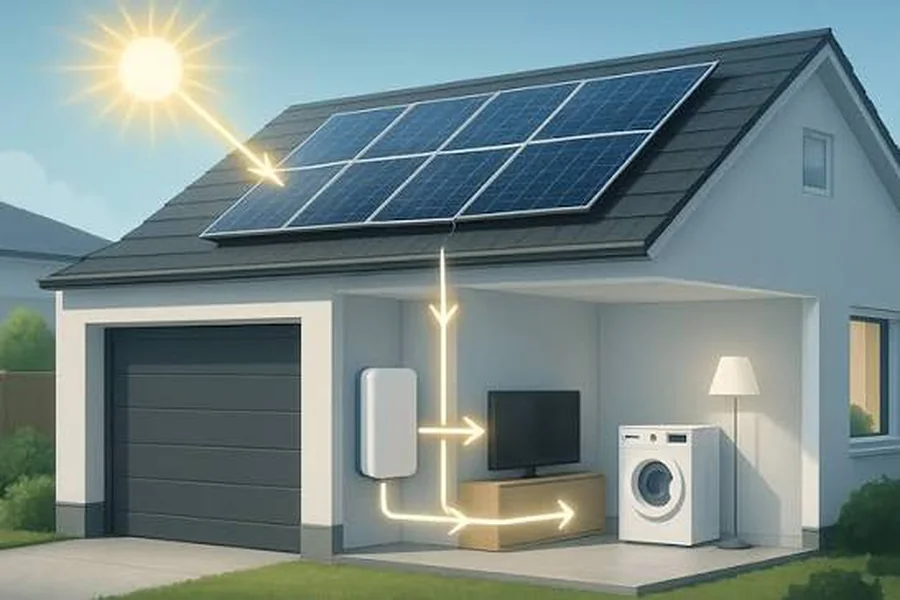
The global conversation around electricity generation has fundamentally shifted in recent years. As utility rates continue to climb and the environmental impact of fossil fuels becomes increasingly undeniable, homeowners are actively seeking sustainable alternatives. It is no longer enough to simply rely on an aging national grid that is susceptible to outages and price hikes. To achieve true independence and resilience, you must consider Solar Solutions and Beyond: Future-Proofing Your Home’s Energy. This concept goes far past the simple installation of a few photovoltaic panels on a rooftop. It represents a comprehensive, forward-thinking approach to how a household generates, consumes, manages, and stores its electricity. By embracing the latest technological advancements in renewable infrastructure, property owners can protect themselves from volatile energy markets while making a tangible contribution to environmental conservation. Transforming a traditional house into a self-sustaining ecosystem might initially seem like a complex undertaking, but breaking down the process reveals a clear, logical path forward. When you invest in modern energy infrastructure, you are not just upgrading your electrical panel; you are securing the long-term viability, comfort, and financial stability of your living space for decades to come.
Why Transition to Renewable Power?
The decision to upgrade your home’s electrical infrastructure is often driven by a combination of economic, environmental, and practical considerations. The most immediate catalyst for many households is the persistent rise in utility costs. Traditional electricity prices are tied to the volatile fossil fuel market, meaning that homeowners are perpetually at the mercy of global supply chains and inflation. By generating your own power, you effectively lock in your energy costs for the next twenty-five to thirty years. This predictability provides immense financial relief and allows for more accurate long-term budgeting. Furthermore, the return on investment for renewable systems has never been more attractive, bolstered by various local and federal tax incentives designed to encourage green energy adoption.
Beyond the monthly savings, installing a robust energy system significantly increases the overall value of your property. Real estate market studies consistently show that houses equipped with modern, efficient power generation and storage capabilities sell faster and at a premium compared to their standard counterparts. Prospective buyers recognize the immense value of moving into a home with low overhead costs and built-in resilience. This makes your initial investment not just a home improvement project, but a strategic financial asset that pays dividends when it is time to sell or refinance.
Environmental stewardship is another critical factor driving this transition. Traditional power plants are major contributors to greenhouse gas emissions and air pollution. By harvesting sunlight, you are actively reducing your household’s carbon footprint and decreasing the overall demand for ecologically damaging fossil fuels. Every kilowatt-hour generated on your roof is one less kilowatt-hour that needs to be produced by burning coal or natural gas. Finally, energy security is becoming a paramount concern. Aging utility grids are increasingly vulnerable to extreme weather events, rolling blackouts, and infrastructure failures. A localized power system ensures that your family remains safe, comfortable, and connected even when the central grid goes down.
Essential Components of Modern Solar Systems
When building a resilient home energy network, understanding the core hardware is crucial for maximizing efficiency and longevity. The most visible component of this infrastructure is the photovoltaic array itself. Modern panels have evolved significantly, with monocrystalline technology leading the market due to its high efficiency and sleek aesthetic. These panels are manufactured from a single, continuous crystal structure, allowing them to convert a higher percentage of sunlight into usable direct current electricity. While polycrystalline options exist, the slight premium for monocrystalline panels is usually justified by their superior performance, particularly in environments with limited roof space or suboptimal sun exposure.
The heart of any renewable setup, however, is the inverter system. Photovoltaic panels generate direct current, but your household appliances require alternating current. The inverter is responsible for bridging this gap. Traditional string inverters connect an entire row of panels together, but this means the whole string’s output can be bottlenecked by a single shaded panel. To combat this, modern systems utilize microinverters or power optimizers. Microinverters are attached to each individual panel, allowing them to operate independently and ensuring that shade on one part of the roof does not compromise the entire array’s performance. This decentralized approach maximizes overall energy harvest and provides detailed performance data for each specific panel.
Equally important, though often overlooked, is the mounting and racking hardware. This equipment anchors your investment to the structural framework of your house. It must be engineered to withstand severe weather conditions, including high winds and heavy snow loads, while maintaining the watertight integrity of your roof. High-quality racking systems are typically constructed from anodized aluminum and stainless steel to prevent corrosion over their decades-long lifespan. A proper installation ensures an optimal tilt and orientation toward the sun, maximizing your energy yield while protecting the underlying roofing materials from unnecessary wear and tear.
Integrating Smart Home Technology
The true potential of modern residential power is unlocked when generation is paired with intelligent management. Upgrading your infrastructure is no longer an isolated project; it is about creating a cohesive, communicative ecosystem. At the center of this integration is the smart electrical panel. Unlike traditional breaker boxes that simply distribute power and trip during overloads, smart panels provide granular, circuit-level control and monitoring. Through intuitive smartphone applications, homeowners can see exactly where their energy is going in real-time. You can identify power-hungry appliances, monitor the daily output of your photovoltaic array, and remotely control individual circuits to optimize your consumption.
This intelligent infrastructure enables sophisticated automated load shifting. For example, if you own an electric vehicle, charging it can be a massive drain on your electrical capacity. A smart energy ecosystem can be programmed to communicate with your vehicle’s charger, directing it to draw power only during peak sunlight hours when your panels are producing excess electricity. This ensures that you are fueling your vehicle with free, green energy rather than pulling expensive electricity from the grid during peak evening hours. Similar automation can be applied to high-consumption appliances like heat pumps, water heaters, and pool pumps, operating them when renewable generation is at its highest.
Furthermore, modern thermostats and climate control systems integrate seamlessly into this network. By learning your daily routines and tracking weather forecasts, these devices can pre-cool or pre-heat your home during periods of high solar production. When the sun goes down and grid electricity prices surge, the smart thermostat allows the house to passively maintain its temperature, drastically reducing reliance on external power. This level of synergy between your home’s appliances and its power generation source transforms a standard house into a highly efficient, self-regulating machine that minimizes waste and maximizes financial savings.
Battery Storage and Grid Independence
To fully future-proof your living space, generation alone is insufficient; you must have the capacity to store the energy you produce. The inherent limitation of sunlight is its intermittency. Your panels produce the most power during the middle of the day, which ironically is when most households consume the least amount of electricity. Without storage, this excess power is simply sent back to the utility grid. By incorporating high-capacity battery systems, you can capture this surplus energy and save it for use during the evening, overnight, or on cloudy days. This cycle dramatically increases your self-consumption rate and insulates you from time-of-use pricing models implemented by many utility companies.
The chemistry of modern energy storage has advanced rapidly, moving away from bulky, maintenance-heavy lead-acid batteries. Today, lithium-ion and lithium iron phosphate technologies dominate the residential market. These modern units are compact, highly efficient, and capable of thousands of charge cycles with minimal degradation. Lithium iron phosphate, in particular, is gaining immense popularity due to its superior thermal stability, longer lifespan, and enhanced safety profile. These batteries can be discharged more deeply without suffering damage, providing homeowners with a larger usable energy reserve and peace of mind regarding the system’s longevity.
Beyond daily energy balancing, a robust battery setup provides the ultimate defense against utility failures. In the event of a grid blackout, a properly configured storage system will instantaneously isolate your home from the external network and begin supplying power to your essential circuits. Your lights, refrigeration, and communication devices will remain operational while the rest of the neighborhood goes dark. Furthermore, some modern storage systems can participate in virtual power plant programs. This allows homeowners to occasionally sell stored energy back to the grid during extreme demand spikes, transforming a backup power source into an active, revenue-generating asset that benefits both the homeowner and the wider community.
FAQs
What is the typical return on investment period for a complete home energy system?
The timeline varies based on local utility rates and available tax incentives, but most homeowners see a full return on their initial investment within seven to ten years, followed by decades of virtually free electricity.
Can I install a battery storage unit if I already have photovoltaic panels on my roof?
Yes, existing setups can usually be retrofitted with modern storage solutions by integrating an alternating current coupled battery system or upgrading the existing inverter to a hybrid model capable of managing storage.
How does net metering work with my utility company?
Net metering is a billing mechanism that credits you for the excess electricity your system adds to the local grid, allowing you to use those credits to offset the cost of power you pull from the grid when your system is not producing.
Do these renewable energy setups require regular maintenance or professional servicing?
These residential power systems are largely self-sufficient and lack moving parts, requiring only occasional surface cleaning and a routine professional inspection every few years to ensure optimal performance.
Final Thought
Taking control of your electricity consumption is one of the most impactful decisions you can make for your property. By embracing Solar Solutions and Beyond: Future-Proofing Your Home’s Energy, you are actively safeguarding your family against rising utility costs, aging infrastructure, and environmental degradation. The integration of high-efficiency generation, smart home management, and robust battery storage creates a resilient living space that is prepared for the challenges of tomorrow. As technology continues to evolve and the global shift toward sustainability accelerates, investing in a comprehensive residential power ecosystem ensures that your house remains a modern, efficient, and valuable asset for generations to come.