
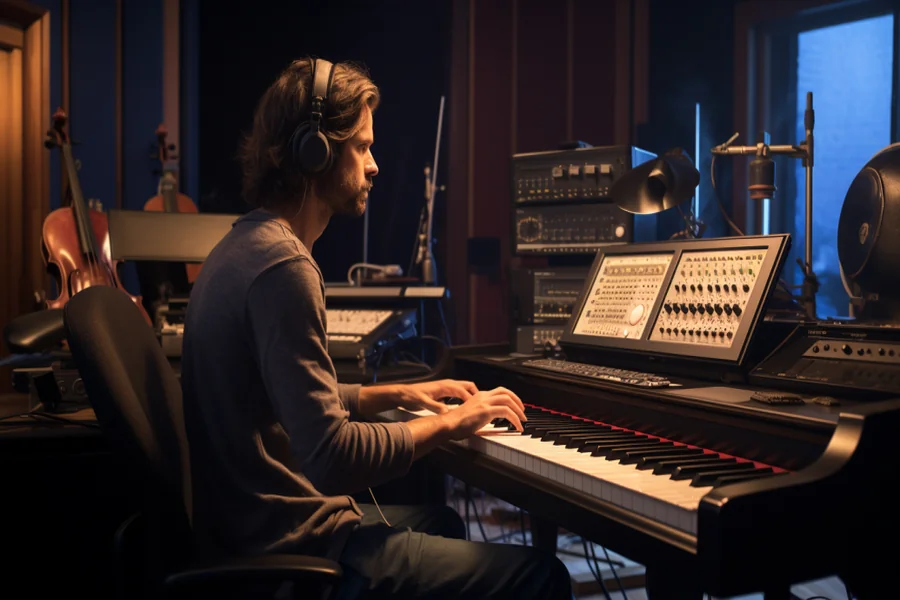
When the theater lights dim and the silver screen flickers to life, an invisible force immediately takes hold of the audience. Long before a single word of dialogue is spoken, the atmosphere is set by a carefully crafted arrangement of sounds and melodies. This underlying musical heartbeat is the Symphony of the Shadows: The Crucial Role of Film Scores, a vital component of cinematic storytelling that often goes unnoticed by the conscious mind. Music in film is the unseen narrator, the emotional compass, and the psychological bridge between the characters on screen and the viewers in their seats. Without this auditory backdrop, the most thrilling action sequences would feel hollow, and the most heartbreaking tragedies would lose their profound resonance.
The art of film scoring is a delicate dance between image and sound. A director provides the visual canvas, but the composer holds the palette of emotions. Every sweeping string section, every sudden percussion strike, and every lingering piano chord is meticulously designed to manipulate the viewer’s subconscious. Through the subtle integration of melodies and harmonies, composers can foreshadow impending doom, highlight a character’s internal conflict, or elevate a moment of triumph to mythic proportions. This article delves deeply into the fascinating world of cinema music, examining its evolution, its psychological impact, and the brilliant minds that craft the soundtracks of our lives.
The Emotional Anchor of Cinema
Imagine watching a tense thriller or a soaring romantic epic on mute. The visuals alone might convey the basic plot, but the profound emotional connection would be entirely severed. Film scores act as the emotional anchor of cinema, guiding the audience’s feelings with extraordinary precision. While actors use facial expressions and body language to communicate their characters’ internal states, the score amplifies these performances, translating complex human emotions into an auditory language that bypasses rational thought and strikes directly at the heart. It tells the audience not just what is happening, but how they should feel about what is happening.
The power of a film score lies in its ability to dictate pacing and tone. A rapid, staccato rhythm can induce anxiety and mimic the racing heartbeat of a character in danger. Conversely, a slow, legato melody played on a solitary cello can evoke a deep sense of melancholy and loss. Composers often use musical dissonance—chords that sound harsh or unresolved—to create a feeling of unease and tension, making the audience physically uncomfortable during suspenseful scenes. When that dissonance is finally resolved into a harmonious chord, the resulting sense of relief is palpable. This constant ebb and flow of tension and release is what keeps viewers glued to the edge of their seats, fully immersed in the cinematic illusion.
Furthermore, film scores have the unique ability to convey subtext. A character might be smiling and speaking politely, but a sinister, underlying musical motif can reveal their true, malicious intentions to the audience. This dramatic irony, created entirely through sound, enriches the narrative and adds layers of complexity to the storytelling. The music serves as the voice of the film’s soul, articulating the unspoken thoughts and hidden fears that dialogue and cinematography alone cannot capture.
Historical Evolution of Movie Music
The history of film music is as rich and dynamic as the history of cinema itself. In the early days of silent films, movies were never truly silent. Theaters employed live musicians, ranging from a single pianist to a full orchestra, to provide musical accompaniment. Originally, this music served a highly practical purpose: to drown out the loud, distracting whir of the hand-cranked film projectors. However, musicians quickly realized that they could enhance the viewing experience by matching their playing to the mood of the scenes. They relied on catalogs of classical music and popular tunes, rapidly switching between pieces to match the frantic pace of early visual storytelling.
With the advent of synchronized sound in the late 1920s, the role of the composer underwent a dramatic transformation. The Golden Age of Hollywood brought forth the era of the lush, symphonic score. Composers like Max Steiner and Erich Wolfgang Korngold, heavily influenced by late-Romantic European classical music, established the template for the epic orchestral soundtracks that remain popular today. They utilized massive orchestras to create sweeping, melodramatic scores that closely mirrored the on-screen action, a technique sometimes referred to as “mickey-mousing” when the music physically mimics a character’s movements.
As cinema matured through the mid-20th century, so did its music. The 1950s and 1960s saw the introduction of jazz and modernist elements, spearheaded by innovators like Bernard Herrmann and Elmer Bernstein. Herrmann’s collaboration with Alfred Hitchcock demonstrated that film scores could be psychologically complex and deeply unsettling, utilizing smaller ensembles and unconventional orchestrations. The late 20th century brought the electronic revolution, with composers like Vangelis and John Carpenter using synthesizers to create futuristic, ethereal soundscapes that redefined science fiction and horror. Today, the landscape of film scoring is incredibly diverse, blending traditional orchestral arrangements with cutting-edge electronic production, ambient sound design, and global musical traditions.
How Composers Manipulate Audience Psychology
To understand the crucial role of film scores, one must examine the psychological tools composers use to shape the audience’s experience. The most powerful of these tools is the leitmotif. A concept popularized by the opera composer Richard Wagner, a leitmotif is a recurring musical phrase associated with a specific character, place, or idea. By consistently linking a melody to a visual element, the composer trains the audience’s brain to make a subconscious connection. When that melody returns later in the film, perhaps played in a different key or on a different instrument, it triggers a rush of memories and associations, instantly recalling the history and emotional weight of that character or concept.
Tempo and rhythm are equally critical in psychological manipulation. The human brain naturally synchronizes to rhythms, a phenomenon known as entrainment. Composers exploit this biological response to alter the viewer’s physical state. An accelerating tempo can genuinely increase a viewer’s heart rate and respiration, inducing a state of panic during a chase sequence. A slow, steady rhythm can have a hypnotic, calming effect. The spaces between the notes are just as important as the notes themselves; a sudden, unexpected silence can be far more terrifying than a loud crash, as it leaves the audience holding their breath, anticipating the next sonic assault.
Instrumentation also plays a massive role in setting psychological context. The distinct timbre of different instruments evokes specific cultural and emotional associations. The soaring sound of a French horn is almost universally recognized as a call to heroism and adventure. The plaintive wail of a violin solo speaks of tragedy and heartbreak. The unnatural, wavering tone of a theremin instantly signals to the audience that they are entering the realm of the otherworldly or the supernatural. By carefully selecting their sonic palette, composers can instantly transport an audience to a different time period, a foreign culture, or an entirely alien world, long before the production design has fully established the setting.
Famous Cinematic Soundscapes
The impact of film scores is best understood by looking at specific cinematic soundscapes that have become ingrained in popular culture. Consider the iconic two-note motif from Steven Spielberg’s thriller featuring a massive great white shark. With just two alternating notes played on the low strings, the composer created an enduring anthem of primal terror. The music acts as a substitute for the unseen predator, signaling its relentless approach and building unbearable tension. The simplicity of the motif is its genius, proving that a film score does not need to be structurally complex to be psychologically devastating.
Another prime example is the music of the epic space opera franchise that debuted in 1977. The composer for this series revitalized the classic Hollywood symphonic style, creating a massive, operatic score filled with heroic fanfares and menacing marches. The music is so integral to the identity of the films that it is nearly impossible to imagine the narrative without it. The specific theme composed for the series’ primary antagonist is one of the most recognizable pieces of music in cinematic history. Its heavy, aggressive rhythm and oppressive brass instrumentation perfectly encapsulate the crushing power of a galactic empire, turning a man in a black plastic suit into an immortal icon of cinema villainy.
We must also look to the sparse, haunting scores of the spaghetti western genre from the 1960s. Instead of relying on lush orchestras, the genre’s defining composer utilized unconventional instruments like electric guitars, cracking whips, whistling, and howling vocals. This created a gritty, desolate soundscape that perfectly matched the morally ambiguous characters and the sun-baked, barren landscapes of the films. These distinctive soundtracks proved that breaking the established rules of film scoring could result in a fresh, unforgettable auditory experience that completely redefines a genre.
Final Thought
The magic of cinema is not just in what we see, but deeply rooted in what we hear. The symphony of the shadows works tirelessly behind the scenes, elevating the visual medium into a transcendent, multi-sensory experience. Film composers are master psychologists and storytellers, using their intricate knowledge of melody, harmony, and rhythm to guide our emotional journeys through the dark. They have the power to make us weep for fictional characters, cheer for impossible victories, and tremble at unseen terrors. As long as stories are projected onto screens, the crucial role of film scores will remain the lifeblood of the cinematic arts, ensuring that the emotional resonance of a great movie stays with us long after the credits have finished rolling.
FAQs
What is a film score? A film score is the original music written specifically to accompany a motion picture.
How does a film score differ from a soundtrack? A film score specifically refers to the instrumental background music composed for the film, whereas a soundtrack often includes pre-existing licensed songs and vocals featured in the movie.
What is a leitmotif in film music? A leitmotif is a recurring musical phrase or melody that is associated with a particular character, idea, or setting within the narrative.
Why do composers use dissonant music in horror films? Composers use dissonant music because the unresolved, clashing chords create a sense of psychological unease and tension that enhances the feeling of fear.
How did early silent movies handle background music? Early silent movies relied on live musicians playing pianos or organs in the theater to provide musical accompaniment and cover the noise of the film projectors.